Armenian News Network / Groong
A Critical Essay on the movie Ojakh: A Marvel to Behold
December 15, 2025
By Bedros Afeyan
PALO ALTO, CA
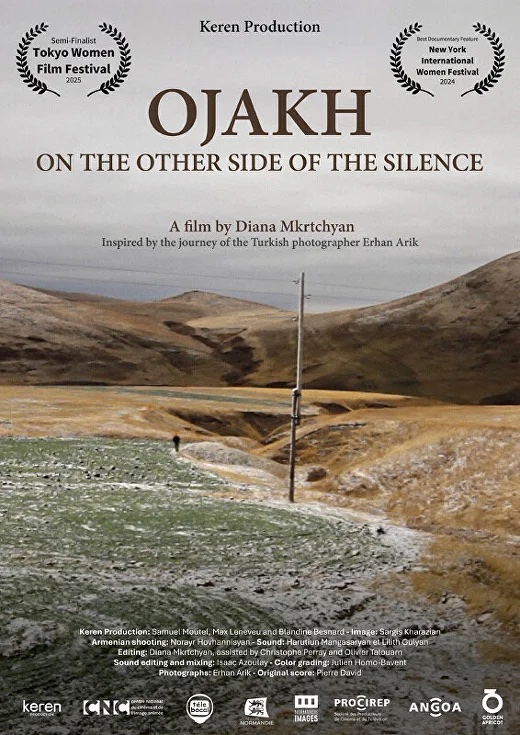
Ojakh is a must-see documentary by the French Armenian Director Diana Mkrtchyan.
Ojakh poster
Ojakh, like an Armenian high holiday meal, is meticulously and painstakingly prepared. It is a feast of potent documentary cinema that surpasses expectations with each living frame. Its running voice-over is brimming with grandiloquence. The saga strengthens with each leaf of unfolding storytelling. Each stunning image dances with the next, forming a metaphorical fortress of stomping Armenians stepping, jumping, swaying, demanding redress. Ojakh is like a soul cleansing that lifts the dust of lies burying our past and marches instead towards the preponderance of native truth from village to village, survivor by survivor a hundred years hence, starkly united into one undeniable, historical Phoenix of fate.
Ojakh is an active archeological heritage site where truth is excavated together with tragedy, after it has all been converted to modest but unmistakable sunshine, hope and dignity. There are others who come towards our history and its perversion with the agenda of keeping the lid on the truth. That gang seeks shadows, corrosion, mold, mildew, decay and death for Armenians and their living memories. A pox on such misguided ill-wishers. Ojakh, par contre, is warm and inviting, stressing the real and the authentic, dignified and stately, in every visited Armenian villager’s home, where a centenarian with a horror story resides (footage from 2016). In contrast, when Ojakh visits Eastern Turkey, our ancestral lands, (Gars, Ardahan, Moush, Van, …) Ojakh chronicles the quasi-abandoned stillness in repossessed old Armenian homes, where there reside mysterious, ghostly, and haunted traces of our past, such as an abandoned ojakh (wood fired oven, in Turkish). It all appears stilted somehow, out of balance, plenty awkward, an unfinished historical sentence or phrase, as if abandoned, mid thought, leaving behind an abyss, abuse, abased.
This is the quest of an Istanbul based Turkish photographer, Erhan Arik, to go look for the old Armenians who used to live in today’s Eastern Turkey, now devoid of Armenians, and to find and photograph them in villages across the river in Armenia, in 2008. Arik’s efforts gave rise to an exhibit of text and images that had international exposure and acclaim. In a 2015 showing in Nancy, a city in North-Eastern France, filmmaker Diana Mkrtchyan was so inspired by Erhan’s photographic and narrative work that she tried to bring those images and words alive. She undertook to make a France/Armenia collaborative documentary of these near border Armenian villages where refugees had settled from the Ottoman perpetrated 1915-1923 Genocide of Armenians (and also of Greeks, Assyrians, …). Diana Mkrtchyan patiently filmed these surviving witnesses and victims in Armenia with her crew in 2016 as a second encounter with the curious Turkish photographer. There followed 8 more years of steady editorial work with this footage, now back in France, so that this 95 minute movie, Ojakh, could emerge in 2024, while the Genocide survivors, one by one gave up their ghosts.
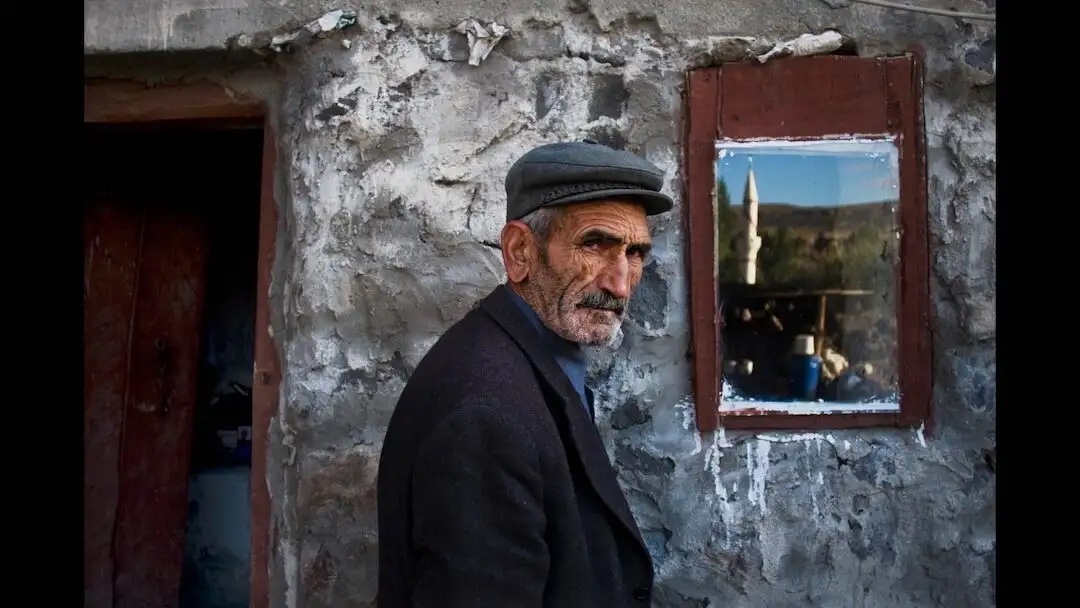
A Frame from the movie Ojakh
Ojakh means hearth, in Armenian. A cozy, old timey location in the traditional Armenian kitchen, where all the cooking and intimate, intergenerational conversations and true collaborations take place among family members. You could say that Diana’s work is an Ekphrasis inspired by Arik’s photographs. The Turkish government and propaganda machine say: Genocide? What Genocide? 1915? So long ago! There were no Armenians here. We have been here for Millennia… Right! This coming from tribes that originated from the Mongol Steppes. We built them a church and they went away. Where did they go? Where are they? We just don’t know. Who are they again? Armenians? This kind of performative Turkish propaganda/diplomacy art has been going on for well over a century. In Ojakh, these Armenians reappear. In their last years of life for sure. But with some dignity. They are simple villagers possessing crystal-clear memories. They are not wound up rhetoric puppets. They do not expound; they do not frame, but offer testimony, facts, consequences, and desires to see their native land again, just across a river, and across the poisoned barbed wires of history, geography, and political porn. These old Armenian memory banks are not like those of communist brainwashed younger slaves of that other monstrous regime of repression that directly tried to erase and diminish the soul of a grand people in a tiny remaining sliver of historical Armenia we call Hayastan. No, not that. But a suffering lot from before the monstrosity of a Soviet Cultural Thrashing Machine. Between the Ottoman and the Soviet, our history, its calamities and existential threats, have a habit of being erased before a child can grow up to cry: wait a minute! Hold on there! How dare you deny the reality that has traumatized me so? All the while knowing that what the rest of the world is really saying is: You just don’t matter, Armenian refugees, orphans, survivors, progeny. Sit back. We have a world to run and who are you again? What have you with which to bargain or trade?
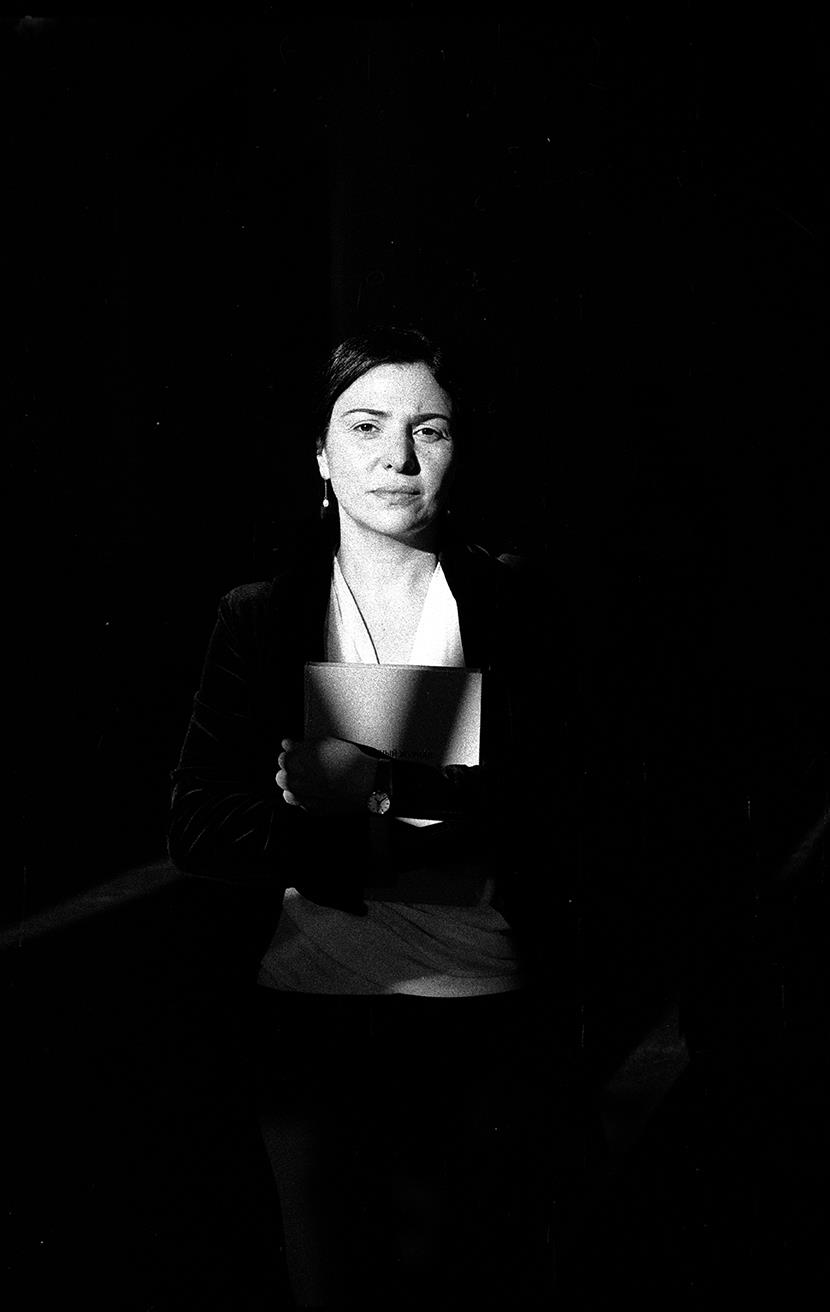
Diana Mkrtchyan
Mkrtchyan’s film, Ojakh, frame by touching frame, and in voice over poetic glue, philosophically stitches together the direct testimony of surviving victims, and in so doing obliterates the Turkish/Soviet colluded attempt to bewilder Armenians and gaslight their own grasp of their physical and cultural rape sans repentance, and sans pity, over a hundred years after the fact. Ojakh testimonials are not shown for them to be pitied by modern audiences. This is not the intent of the epistolary work of Arik, a conscientious Turkish artist with the soul of a poet. Arik’s attempt to deal with the demons of the past as he blurrily saw them before the start of his voyage towards the light, unintentionally spawned Diana’s own saga while birthing her Ojakh many years later. Her ordeal with this impulse (2015, Genocide Centennial commemoration coincident) gave rise to her nine-year odyssey to shape the priceless footage of these last-breath-of-life 1915 Genocide survivors, and transmit their pleas prophetically enshrined in Ojakh.
Ojakh is a treasure of truth, a collaboration between conscientious dwellers on both sides of the border river divide uncloaking historical taboos. Meanwhile, in Yerevan, a tiny monster heading a pathetic regime has renewed attempts to appease Azeris, Turks, Israelis, Brits, the French and the almighty US, with the hopes of economic and security gains. These shameful miscreants caused a second Genocide in Artsakh (Nagorno Karabakh) in 2020 and 2023. Ethnic cleansing by Azeris after a 10-month blockade in 2023, henceforth forgotten, erased. These current political scandals have as their backdrop, these poor skeletal remains of a millennia old past that make home and hearth, ojakh and Ojakh, still photographs to compelling cinema stay the heck alive. We thus are served Mkrtchyan’s cinema as part History, Archeology, A Court of Justice, a single Turk with a camera, a fine eye and a finer pen, and sturdy winter boots, together with a part time Armenian movie maker with her crew (Kudos to the superb cinematographer) and tiny budget, ensconced in the middle of France, working full time, raising three children, while nursing this movie for nine long years, until it hatched, spread its wings, and circle-danced its way into movie festivals and lay nests in our hearts to tilt the world a tiny bit more towards justice, basking in the power of art, relying on Armenian tenacity, indefatigability, and above all non-barterable wit and faith.
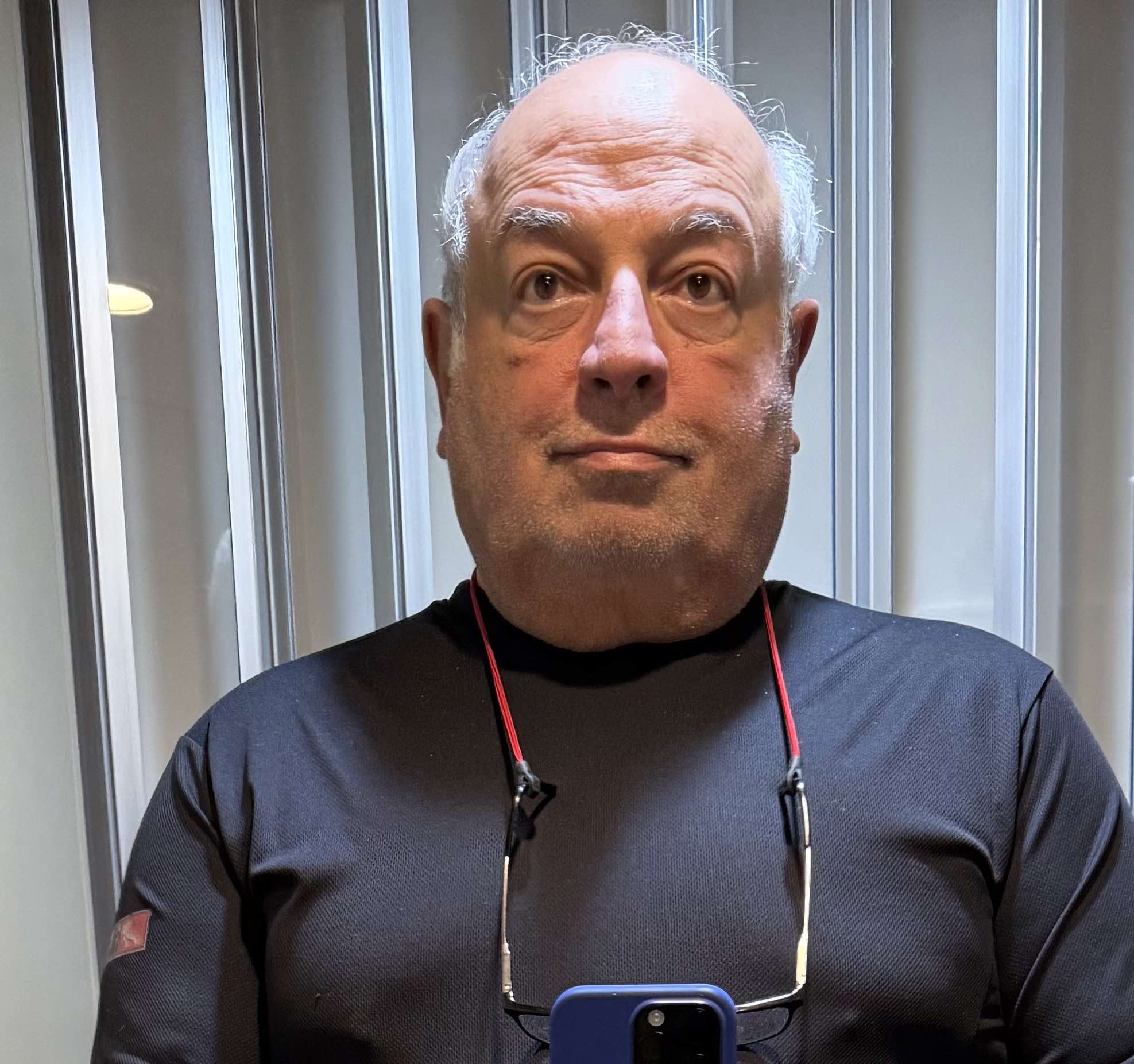
Bedros Afeyan
12-8-2025
Palo Alto, CA
Dr. Bedros Afeyan is a theoretical physicist who works and lives in the Bay Area with his wife Marine. He writes in Armenian and in English, and also paints and sculpts. He is the current editor of The Literary Groong. |
© Copyright 2025 Armenian News Network/Groong and the author.
| Home | Administrative | Introduction | Armenian News | Podcasts | Feedback |